Reiki is a gentle, non-invasive healing practice that supports the body’s natural ability to return to balance.
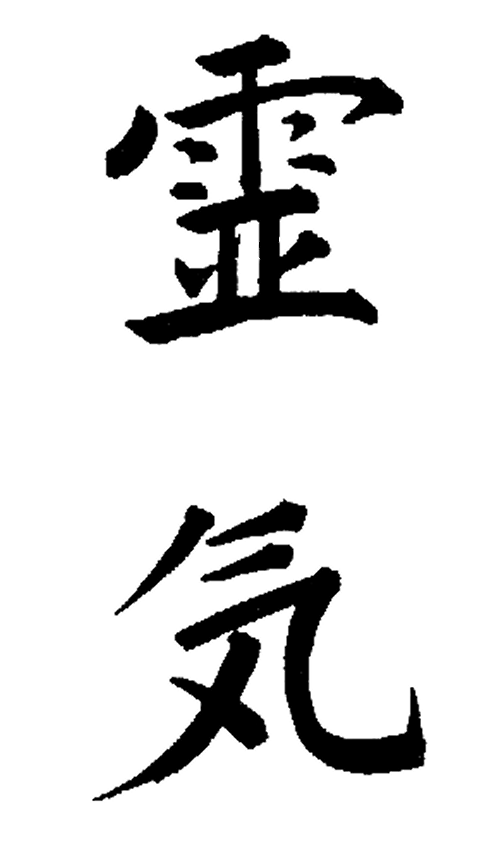
The word Reiki comes from Japanese:
-
Rei = universal, spiritual, or greater wisdom
-
Ki = life force energy that flows through all living things
In Reiki practice, the practitioner acts as a channel, not the source, allowing this supportive energy to flow where it is needed. Reiki works holistically—supporting the physical body, the nervous system, emotions, and the energetic field—without force, manipulation, or diagnosis.
Reiki does not replace medical care. It complements it by helping the system move out of stress and into a state where healing is more possible.

Reiki is Gentle
photo credit Michelle Terry
Common Questions about choosing a Reiki Master
1. How long have you been teaching Reiki?
I began teaching level 1 in 2015. I teach levels 1, 2, Advanced Reiki and Master Reiki.
2. How do you use Reiki in your personal life?
Reiki is an integral part of my spiritual practice as well as an application used throughout my medical career to assist patients along their healing journey. The most evident benefits were documentable decreases in pain and anxiety followed by more positive therapy outcomes. Currently, I practice Reiki with family, friends, fur babies and self care.
3. What is included in your course?
The book 'The Reiki Manual' by Penelope Quest & Kathy Roberts
Helpful handouts
History of Reiki and practical applications
Level I & II attunements
Supervised self practice, practicing Reiki on others, distance Reiki and so much more.
Certificate of completion
Ongoing support via email
4. Is it possible to become a Reiki practitioner and charge for services after this course?
Absolutely! I recommend practicing on friends and family members first. We will discuss this in the training.
5. What is your teaching style?
My teaching style is interactive and hands on. I believe the best way to learn is by seeing, doing and enjoying the process.